
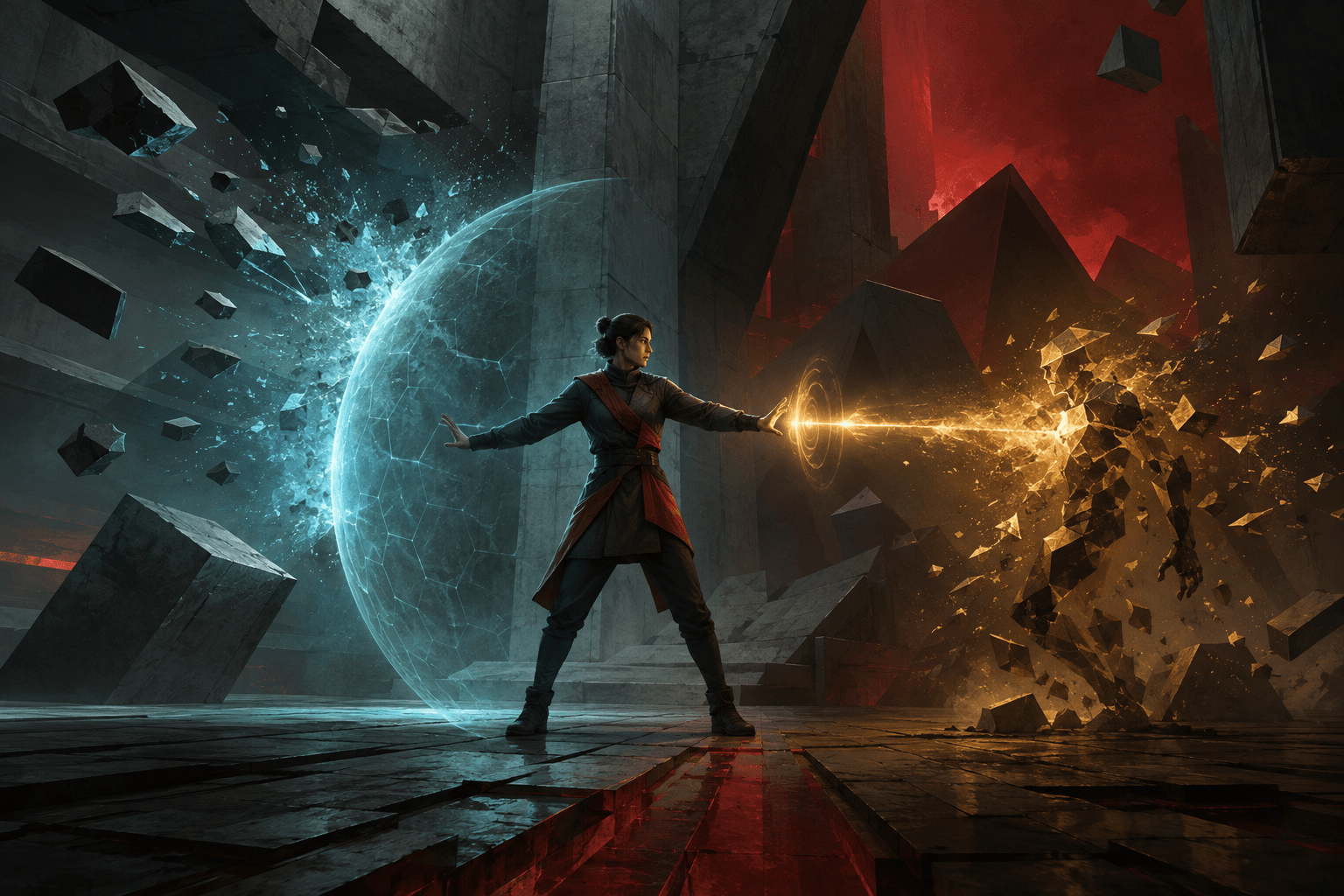
Combat difficulty is often presented as one combined setting. Selecting an easier preset may simultaneously reduce incoming damage, lower enemy health, change enemy behaviour, strengthen aim assistance, and alter resource availability. This can help some players, but it does not allow them to identify which individual part of combat creates a barrier.
Control takes a more modular approach through Assist Mode. Among its options are Immortality and One-Hit Kills. Immortality prevents combat failure through player death, while One-Hit Kills substantially changes how long enemies remain active after the player attacks them.
The two settings can be enabled independently. A player can protect the protagonist from death while retaining longer enemy encounters, shorten encounters without making the protagonist immortal, or activate both.
This separation matters because surviving incoming attacks and defeating enemies are not the same task. They involve different physical, sensory, and cognitive demands. A player may be able to aim and attack but struggle with repeated defensive responses. Another may be able to avoid damage but experience pain or fatigue during extended combat.
What Immortality changes
Remedy describes Immortality as an option that allows the player to make themselves immortal. Its central effect is to prevent death from functioning as the endpoint of combat.
Ordinarily, losing enough health results in failure and a return to an earlier checkpoint. The player may then need to repeat the journey into the encounter, replay introductory combat, reacquire resources, and attempt the entire sequence again.
Immortality removes that death-based loop. The encounter can continue despite damage that would normally end the attempt.
This is more than a change to the amount of health available. A larger health pool postpones failure. Damage reduction makes failure less frequent. Immortality removes death as the consequence of losing health while the setting is active.
The player still controls movement, aiming, attacks, powers, target selection, positioning, and other actions. Enemies remain present and continue to perform their behaviour. The setting does not automatically complete the encounter or navigate the player through the environment.
Immortality may therefore allow a player to participate in combat without the risk that an imperfect defensive response will erase progress. It can preserve the process of using the game’s weapons and abilities while removing one major consequence.
What One-Hit Kills changes
One-Hit Kills addresses the other side of the encounter. Instead of protecting the player from defeat, it allows enemies to be defeated with a single hit under the supported combat behaviour.
This sharply reduces the time and repetition required to remove an enemy. The player still has to initiate an attack, but the encounter no longer depends on repeatedly reducing the same enemy’s health through a longer sequence.
Shorter enemy survival changes several demands at once. The player may need fewer aiming corrections, fewer trigger or button presses, fewer uses of abilities, and less time spent tracking multiple moving targets.
It can also reduce the number of attacks enemies have time to perform. This does not provide the same protection as Immortality, but eliminating a threat quickly can reduce exposure to incoming damage.
One-Hit Kills should not be described as automatic combat. The player remains responsible for directing an attack and engaging with the encounter. The setting changes how much successful damage is required rather than selecting and defeating every enemy without input.
It also does not necessarily remove non-combat objectives, environmental navigation, puzzles, or interactions surrounding a fight. Defeating an enemy quickly may clear the combat barrier without completing the broader mission.
Survival and encounter duration are different barriers
A combat encounter combines several processes. The player must perceive threats, understand enemy behaviour, select targets, aim, attack, manage resources, move through space, avoid hazards, and recover from mistakes. Failure can occur because of difficulty in any one of these areas.
Immortality primarily changes the consequence of receiving damage. A player can remain in the encounter even when defensive timing, movement, visual tracking, or threat recognition is inconsistent.
One-Hit Kills primarily changes the amount of successful offensive action required. It reduces the duration of target tracking and the number of repeated attacks needed to finish supported enemies.
A player with slow reaction time may benefit from Immortality because an unexpected attack no longer ends the attempt. A player with chronic pain may prefer One-Hit Kills because each enemy requires fewer physical inputs. Someone with cognitive fatigue may combine both to reduce the need to monitor health, enemy health, incoming attacks, ammunition, and positioning over an extended period.
These examples are possibilities rather than diagnostic rules. The same feature can affect players differently, and some people may prefer another Assist Mode option instead.
Immortality is not invulnerability to every barrier
Preventing death does not prevent the character from being struck. Attack animations, impact effects, camera movement, sound, controller vibration, visual obstruction, and interruption may remain part of combat.
A player can therefore be immortal while still experiencing sensory overload or difficulty understanding what is happening. Damage may no longer cause failure, but repeated impacts can continue to disrupt aiming and movement.
Immortality also does not remove the need to locate enemies. Control frequently places combat in large, visually complex spaces with multiple elevations, destructible objects, particles, projectiles, and enemies attacking from different positions.
If a player cannot identify a target or determine where to go after combat, remaining alive may not resolve the underlying barrier. The option provides consequence reduction rather than complete combat access.
Some encounters may also involve objectives other than simple survival. The player may need to interact with something, protect a location, cross an environment, or complete a mission-specific action. Immortality does not automatically satisfy those requirements.
One-Hit Kills is not the same as stronger aim assistance
Aiming and damage are separate parts of an attack. Aim assistance changes how the game helps the player align an attack with a target. One-Hit Kills changes the result after a supported hit occurs.
Remedy identifies Enhanced Aim Assist as another part of Assist Mode. A player who struggles to place the aiming reticle over a moving enemy may use stronger aim assistance without enabling One-Hit Kills.
Conversely, a player who can aim accurately but cannot sustain repeated firing may enable One-Hit Kills without changing the aiming behaviour.
The settings may also be combined. Enhanced Aim Assist can reduce some of the precision required to line up an attack, while One-Hit Kills can reduce the number of successful attacks needed.
Neither option should be described as physical controller compatibility. Aim assistance operates within the game’s targeting system. It does not make every controller shape, button position, input device, or motor movement accessible.
Combining Immortality and One-Hit Kills
When both settings are enabled, the player is protected from death and enemies can be removed with a successful hit. This greatly reduces the consequences and duration of combat while leaving the player responsible for movement, target identification, attack initiation, and progression through the environment.
This combination may support players who want to experience the story, environments, and supernatural abilities without combat acting as a repeated failure gate.
It can also function as a practice environment. A player may learn the controls, observe enemy animations, test powers, and explore encounter spaces without dying. One-Hit Kills can then be disabled if the player wants longer opportunities to practise attacking the same enemy.
Alternatively, Immortality can be disabled while One-Hit Kills remains active. Combat then retains the possibility of player death, but threats can be eliminated quickly. This can create a short, high-consequence encounter rather than a long exchange.
Keeping Immortality active while leaving One-Hit Kills off creates the opposite structure. Enemies retain their ordinary durability, allowing the player to practise weapon forms and powers for longer without death ending the session.
The value of Assist Mode lies partly in these combinations. The player does not have to accept one universal definition of easier combat.
How the options may reduce repetition
Failure in a combat-heavy game can produce two kinds of repetition. The player repeats individual actions within the fight, and death may force the entire encounter to be repeated.
One-Hit Kills reduces within-encounter repetition. Fewer successful attacks are required to remove each supported enemy.
Immortality reduces repetition caused by death. The player does not have to restart the encounter because health was depleted.
Reducing both forms of repetition may be useful for players with limited stamina, repetitive-strain injuries, chronic pain, motor fatigue, or executive-function barriers that make restarting an already understood task particularly difficult.
It may also reduce frustration when a player can complete most of a long encounter but repeatedly fails near the end. Immortality allows the attempt to continue, while One-Hit Kills can shorten the sequence that must be sustained.
Neither setting removes every repeated action in the game. Traversal, interaction, menu navigation, exploration, and mission structure continue outside combat.
Cognitive effects of removing death
The possibility of losing progress can increase cognitive load. A player may divide attention between the immediate enemy, the health display, available healing elements, safe positions, and the consequences of another mistake.
Immortality can reduce the need to treat health depletion as an approaching restart. This may allow more attention to be directed toward learning controls, recognising enemy patterns, or experimenting with abilities.
It does not remove all decision-making. The player may still need to manage energy, ammunition behaviour, movement, targeting, and mission goals. The combat system remains active even when death is disabled.
Some players may also find that removing failure changes motivation or feedback in an undesirable way. Immortality is optional, so it can be used for a particular encounter and disabled later rather than determining the complete playthrough.
Sensory effects of shorter encounters
Control uses intense combat presentation. Encounters can include red lighting, particle effects, debris, telekinetically launched objects, weapon effects, rapid camera movement, distorted enemies, and layered sound.
One-Hit Kills may shorten exposure to these effects because enemies can be defeated more quickly. Immortality can prevent failure but may prolong the same encounter if the player continues to have difficulty finding or hitting targets.
Neither setting directly reduces flashes, particles, colour intensity, camera movement, or combat audio. Their sensory benefit, when present, comes indirectly through changing encounter duration or eliminating restarts.
A player who experiences visual or auditory overload may still need other display, audio, camera, or platform-level settings. Assist Mode should not be treated as a sensory-reduction mode.
Achievements and the absence of a penalty
Remedy explicitly states that using Assist Mode does not affect Trophies or Achievements. Players can enable Immortality, One-Hit Kills, or other Assist Mode options without losing access to those platform rewards.
This avoids turning accessibility into a separate progression track. A player does not have to choose between using an assist and earning the same completion recognition available to other players.
The settings also do not require the player to commit at the beginning of the game. Remedy’s published usage statistics show that some players kept Assist Mode active, some tried it and turned it off, and others changed their selection multiple times.
This supports situational use. A player can enable an option for a difficult boss, a day when symptoms are worse, or a section that creates an unusual barrier.
Assist Mode is different from PlayStation Game Help
Control Ultimate Edition also supports PlayStation 5 Game Help. Remedy’s official deep dive discusses both systems, but they do not perform the same function.
Assist Mode changes gameplay. Immortality, One-Hit Kills, and Enhanced Aim Assist alter how combat behaves.
Game Help provides externalized guidance through PlayStation 5 Activity cards. Remedy created more than 200 videos with textual guidance for the main missions and the The Foundation and AWE expansions. The hints can become progressively more explicit and may show routes, puzzle guidance, or combat strategies.
Game Help can explain what to do, but it does not make the protagonist immortal or cause an attack to defeat an enemy immediately. Assist Mode can change combat without telling the player where to go.
Game Help is a PlayStation 5 feature associated with applicable PlayStation Plus access, whereas Remedy made Assist Mode available across the game’s platforms as a free update.
Platforms and edition considerations
Remedy lists Control for Windows PC, PlayStation 4, PlayStation 5, Xbox One, Xbox Series X|S, and Nintendo Switch through a cloud version. Assist Mode was added free across platforms rather than being limited to Control Ultimate Edition on PlayStation 5.
The Nintendo Switch release is cloud-based. Its playability therefore depends on a suitable network connection and service availability in addition to the accessibility settings inside the game. Immortality and One-Hit Kills cannot compensate for latency, connection interruption, or image-quality changes caused by streaming.
PlayStation 5 Game Help should not be confused with Assist Mode’s platform availability. The former is a platform-specific guidance system; the latter is the in-game group containing the combat modifiers discussed here.
Two independent ways to reduce combat barriers
Control separates the risk of player death from the work required to defeat enemies. Immortality allows combat to continue without death ending the attempt. One-Hit Kills reduces the number of successful attacks required to remove threats.
Remedy explains the purpose, availability, achievement compatibility, and usage of these features in its official Control Assist Mode deep dive.
Access needs vary. Immortality and One-Hit Kills may reduce failure, repetition, fatigue, and encounter duration, but they do not automate navigation, identify targets, remove sensory effects, or make every required input physically accessible.